



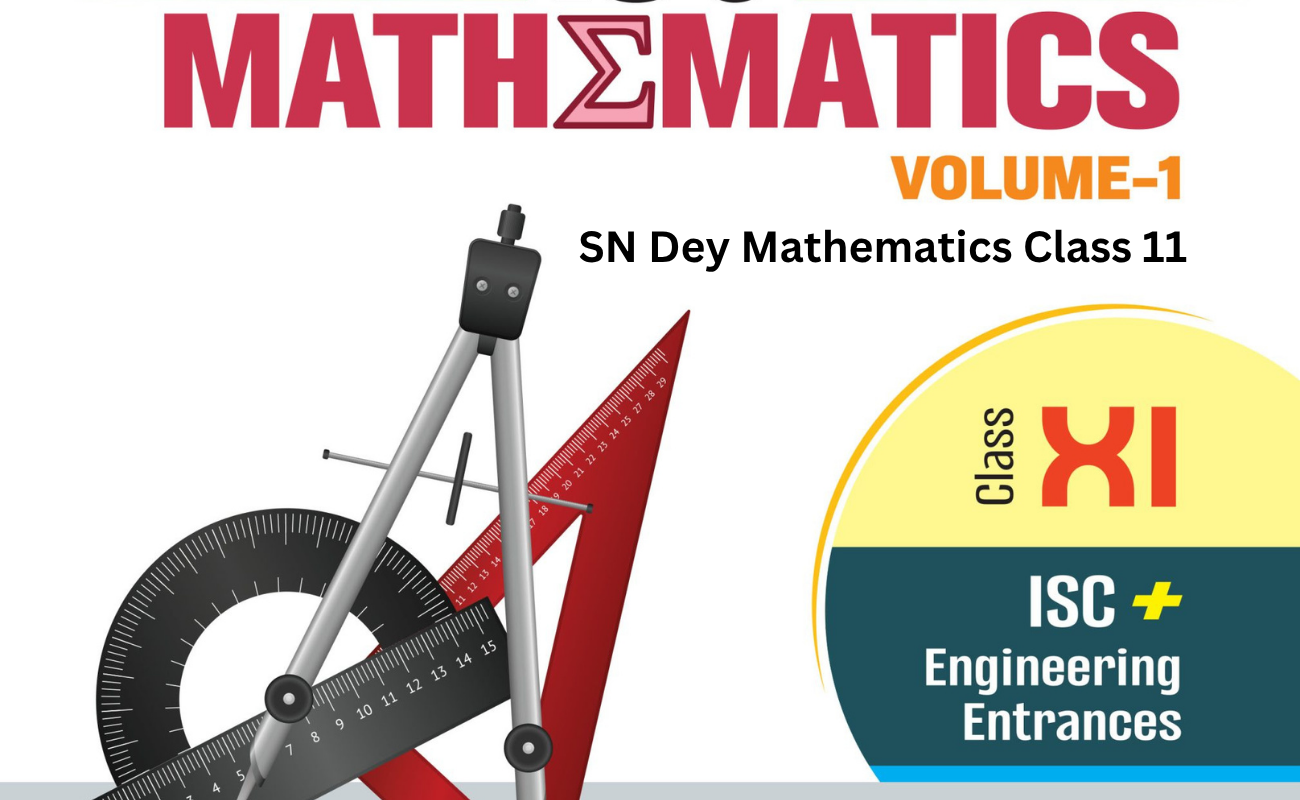
If you are a Class 11 student in West Bengal, you have probably already seen the S.N. Dey maths book on your desk or in your school bag. It is that thick book published by Chhaya Prakashani, written by Sourendranath Dey, and honestly, almost every student in the state uses it. The book comes in both Bengali and English, and it covers the full WBCHSE syllabus. But the part that gives most students sleepless nights?
Trigonometry. That is exactly why so many of you keep searching for “SN Dey mathematics class 11 trigonometry solutions” online. You want someone to break down the sums step by step so you actually get it, not just copy answers. So let us talk about what this book covers, why it is so popular, and how you can tackle those trigonometry chapters without losing your mind.
What Exactly is the S.N. Dey Book?
Let us keep it simple. The S.N. Dey mathematics book for Class 11 is a complete guide that follows the West Bengal Council of Higher Secondary Education (WBCHSE) syllabus. That means whatever your school teacher teaches, and whatever comes in your board exam, is already inside this book. It is a heavy book — over a thousand pages — and the trigonometry portion sits in Unit 2 of the first semester. The good thing about this book is how the questions are arranged. The easy ones come first, then the medium ones, and finally the tricky ones. This helps because you do not get hit with a monster sum on page one. You build your confidence slowly.
Bengali medium students especially love this book, but even English medium schools use it a lot. The language is straightforward, there are plenty of examples, and each chapter has enough practice problems. The only problem? Sometimes the book gives you the final answer at the back, but it does not show you the full working. That is frustrating when you are stuck in the middle of a sum and have no idea what to do next. That is why students hunt for solved versions, video explanations, and PDFs online.
Which Trigonometry Chapters Are in the Book?
The trigonometry section is not just one chapter. It is actually spread across several small chapters, and they all link together. Skip one, and the next one becomes ten times harder. Here is what you will find:
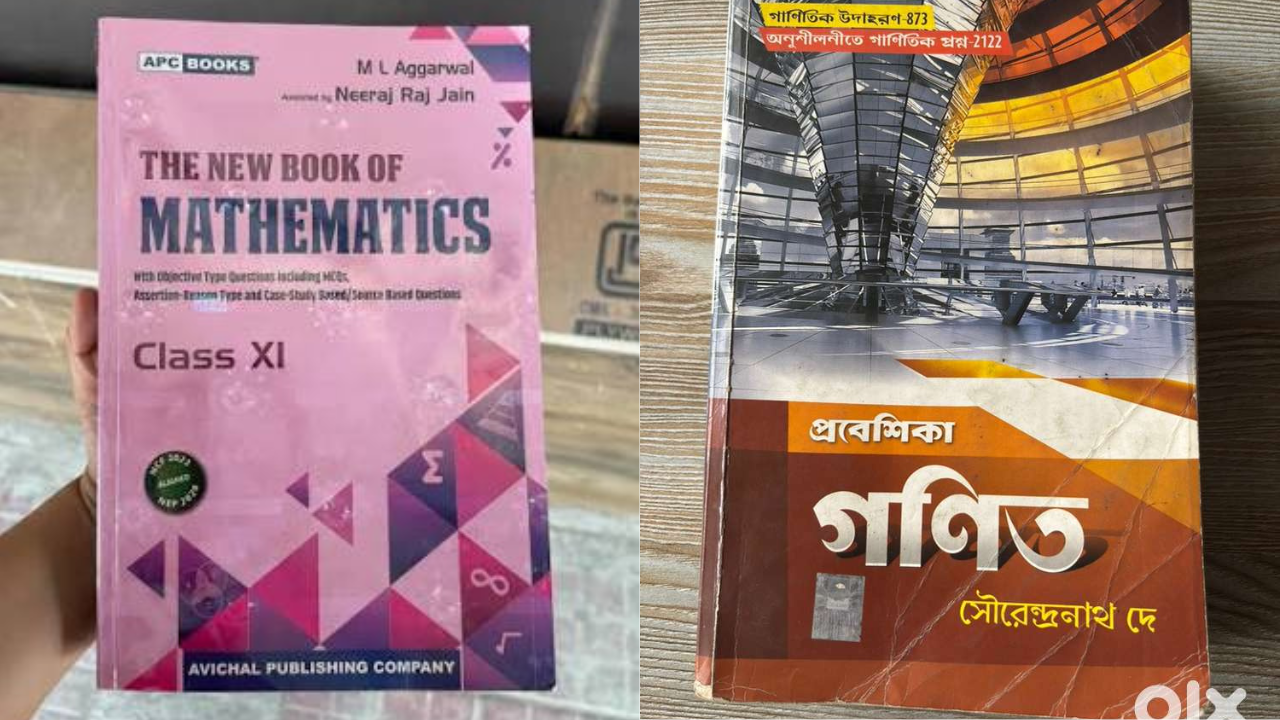
Measurement of Trigonometric Angles — This is where it all begins. Degrees, radians, how to convert between them, and problems on arc length and sector area.
Trigonometric Functions and Standard Angles — Sine, cosine, tangent, cosecant, secant, cotangent. Plus the values for 0°, 30°, 45°, 60°, 90°. You need to know these by heart. No shortcuts here.
Trigonometric Functions of Allied Angles — Angles like (90° ± θ), (180° ± θ), (270° ± θ), (360° ± θ). The sign rules for each quadrant are super important in this chapter.
Trigonometric Functions of Compound Angles — This is where sin(A+B), cos(A+B), tan(A+B) and their subtraction versions enter. These formulas keep showing up in later chapters, so learn them properly now.
Transformation Formulae (Sum and Product) — Converting sums into products and products into sums. The C-D formulas and factor formulas live here.
Trigonometric Functions of Multiple Angles — Formulas for 2A, 3A and so on. Sin 2A, cos 2A, tan 2A, sin 3A, cos 3A — all of that.
Trigonometric Functions of Submultiple Angles — The opposite of the previous one. Angles like A/2, A/3, and their related formulas.
General Solutions of Trigonometric Equations — Probably the most important and the most feared chapter. Finding all possible solutions for sin x = sin α, cos x = cos α, tan x = tan α. The general solution formulas are the heart of this chapter.
Each chapter has both short objective-type questions and long answer-type questions. So whether your exam asks for one-markers or ten-markers, the S.N. Dey book has you covered.
Read Also: Best Sunscreen for Men in 2026: Top Picks for Every Skin Type
Why Are Students Always Looking for Solutions?
There are a few honest reasons. First, the book has a lot of problems, and some of them are genuinely hard. A single question from the compound angles or general solutions chapter can eat up 15 to 20 minutes if you do not know the right trick. Second, many students study alone at home. Maybe your tuition teacher is not available, or maybe you are preparing at midnight before the exam. You need someone to show you the full working so you can see where you went wrong.
Third, a lot of students using this book are also preparing for JEE, WBJEE, or other entrance exams. They do not just want the board-level method. They want to see faster ways, alternate methods, and shortcuts. That is why they look for detailed solution videos. And fourth, let us be real — trigonometry is cruel. One wrong sign, one silly mistake with sin or cos, and your entire answer is garbage. When you check your own work, sometimes you just cannot spot the error. A solved version helps you catch that.
Where Can You Actually Find These Solutions?
YouTube is your best friend here. Many teachers and coaching centres have full playlists where they solve every single question from the S.N. Dey trigonometry chapters. They explain in Bengali or English, write each step on the screen, and you can pause, rewind, and watch again. Channels like “School of Learning,” “Superior Mathematics,” and “VidOnko” have dedicated videos for this. Just search the chapter name and question number — chances are, someone has already made a video for it.
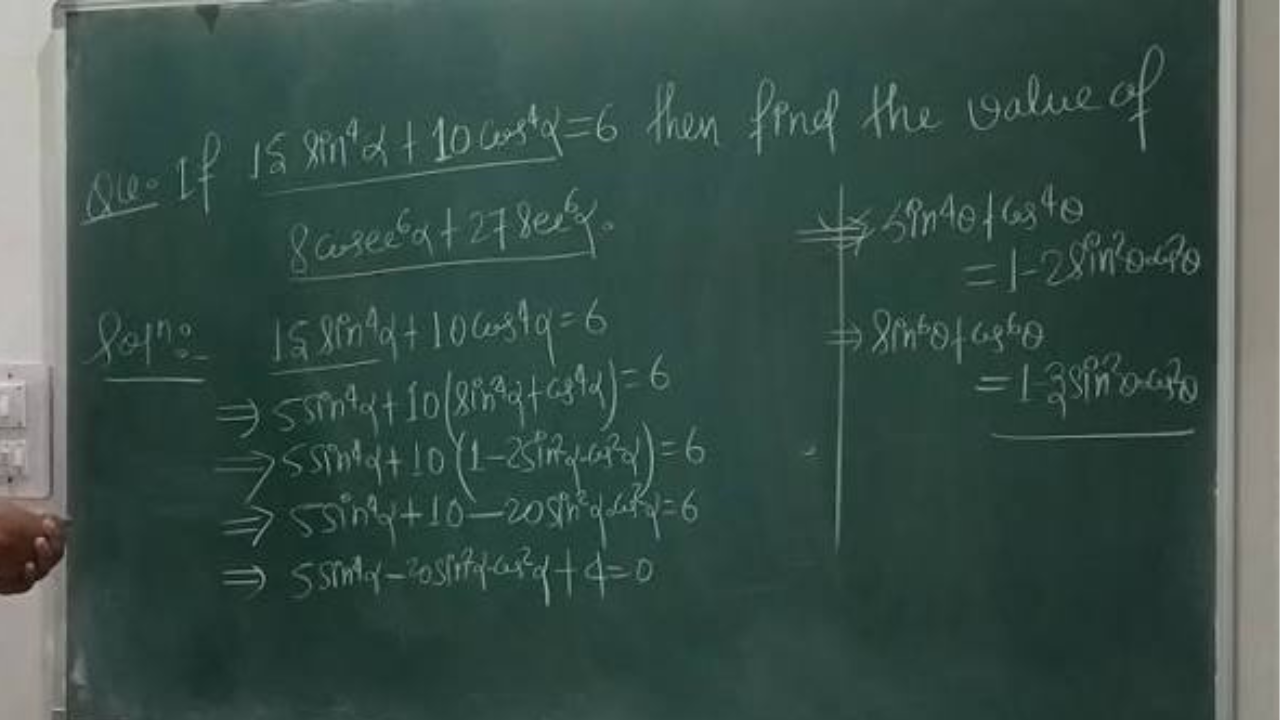
There are also websites like Anushilan.com and VidOnko.com that list section-wise solutions. Some Telegram and WhatsApp study groups share handwritten notes and solved papers too. If you go to a coaching centre, your teacher probably has a solved copy of the book as well.
But here is the thing — do not just copy. That never works. Try the sum yourself first. Get stuck? Then look at the solution. Understand the logic. Close the video or the PDF. Now solve it again on your own. That is the only way it actually stays in your head.
Simple Tips to Actually Master Trigonometry from This Book
Formulas first, everything else later. Trigonometry is basically formulas. If you do not know your basic identities, compound angle formulas, and multiple angle formulas, you are going to struggle in every single chapter. Make a chart, stick it on your wall, and read it daily until it becomes muscle memory.
Do not skip the easy questions. The first few sums in every chapter might feel too simple, but they build your base. If you ignore them and jump to the hard ones, you will fall flat.
General solutions need daily practice. This is the chapter where most students lose marks in exams. The formulas look similar and are easy to mix up. Do at least five general solution problems every single day until you can solve them without peeking at your formula sheet.
Write your steps neatly. In board exams, step marking saves lives. Even if your final answer is wrong, you can still grab partial marks if your method is correct. The S.N. Dey book shows you the proper way to present answers, so follow that.
Use video solutions the right way. Do not watch them while scrolling Instagram or eating dinner. Sit with your notebook, pause after every step, and write it down yourself. Active learning beats passive watching every single time.
Final Word
The S.N. Dey mathematics book is a solid companion for Class 11, and the trigonometry section is genuinely one of its best parts. Yes, some problems will make you want to throw the book across the room. Yes, general solutions can feel impossible on bad days. But if you stick with it, learn your formulas properly, and use the online solution resources wisely, you will get there. Trigonometry is not some monster hiding under your bed. It is just a subject that asks for patience and practice. The S.N. Dey book gives you more than enough material to practice, and the internet gives you the guidance when you need it. So open that book, pick up your pen, and start with question number one. You have got this.
Read More: GST ARN Status: How to Track Your GST Registration Application in India
