



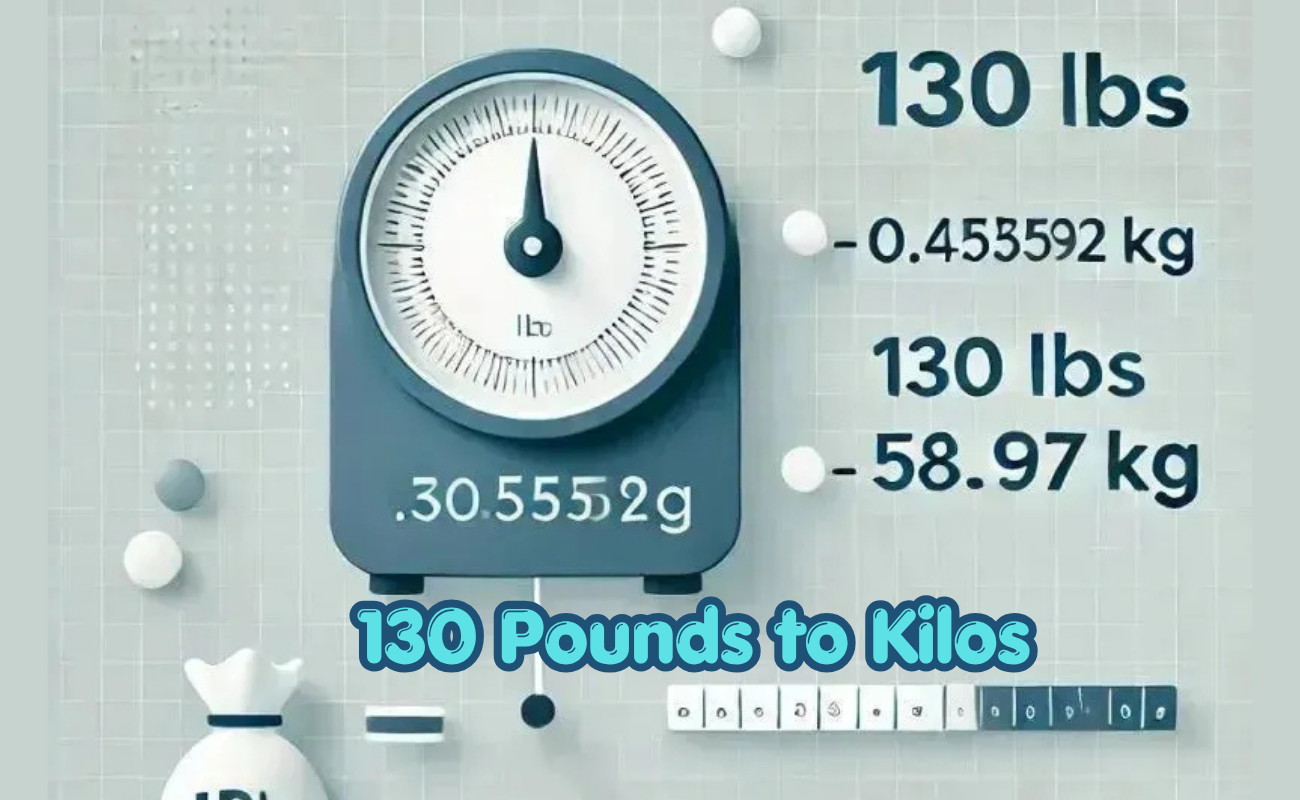
Let’s cut straight to the chase. If someone tells you they weigh 130 pounds, or you see that number on a scale, a label, or a luggage tag, here is exactly what it means:
130 pounds equals 58.97 kilograms.
In everyday talk, everyone just rounds it up and says about 59 kilos. That is the number you will hear at the gym, at the doctor’s office, or in casual conversation when people are switching between the two systems.
How the Math Works
The conversion is dead simple. One pound equals 0.453592 kilograms. You do not need to memorize all those decimals. Just remember that one pound is a little less than half a kilogram.
So to convert 130 pounds to kilos, you multiply:
130 × 0.453592 = 58.96696 kg
Round that to two decimal places and you get 58.97 kg. Round it to the nearest whole number and you get 59 kg. Either way, that is your answer.
Why Do We Even Have Two Systems?
This confuses a lot of people. Why can the world not just use one way to measure weight?
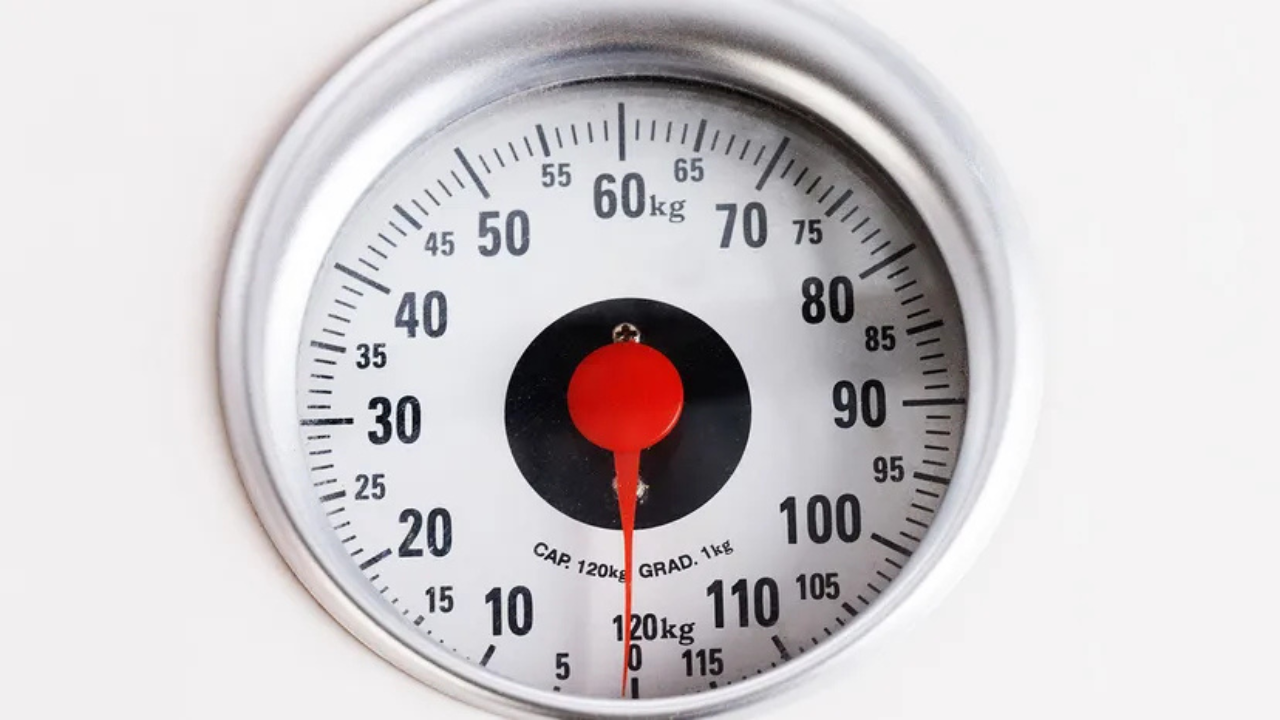
The metric system — kilograms, meters, liters — is what most of the world uses. Europe, Asia, Africa, Latin America, and Australia all run on this system. It is based on multiples of ten, which makes it super easy to learn and use.
Then there is the imperial system — pounds, inches, feet, miles. This one is still going strong in the United States, and to a lesser extent in Liberia and Myanmar. In America, pounds are deeply baked into the culture. Scales at home, at the doctor’s office, at the gym, and in the supermarket all read in pounds. Changing the entire country over to kilograms would be a massive and expensive undertaking, so for now, pounds are here to stay.
That is why you will constantly run into pounds if you watch American movies, follow fitness influencers from the US, shop on American websites, or travel there.
Where You Will Actually Need This
You might think, “When am I ever going to need to know this?” More often than you expect.
At the airport. American Airlines usually lists baggage weight limits in pounds. If your suitcase weighs 130 pounds, you are in serious trouble because that is nearly 60 kilos. Most airlines cap checked bags at around 50 pounds, which is about 23 kilos. Knowing the conversion helps you avoid nasty surprise fees at the check-in counter.
At the gym. A lot of gym equipment, especially in places that import gear from the US, is labeled in pounds. If your trainer says, “Grab the 130-pound dumbbell,” now you know they are talking about roughly 59 kilos. That is heavy, by the way. Not beginner territory.
At the doctor’s office. If you get weighed during a trip to the US, your medical records might say 130 lb. When you get back home and visit your local doctor, they will want that number in kilograms. Being able to translate it accurately keeps your health records straight.
Shopping online. Ever bought clothes, weights, or even pet supplies from an American store? The weight specs are often in pounds. Knowing that 130 lb is about 59 kg helps you figure out if you are ordering the right size or amount.
Cooking and recipes. Some American recipes list meat or produce by the pound. If a recipe calls for 130 pounds of something, you are either feeding an army or reading it wrong, but smaller pound amounts show up all the time and the same math applies.
Read Also: Best Sunscreen for Men in 2026: Top Picks for Every Skin Type
Quick Reference Table
Here is a handy table so you do not have to pull out a calculator every time:
| Pounds (lb) | Kilograms (kg) |
| 100 lb | 45.36 kg |
| 110 lb | 49.90 kg |
| 120 lb | 54.43 kg |
| 130 lb | 58.97 kg |
| 140 lb | 63.50 kg |
| 150 lb | 68.04 kg |
| 160 lb | 72.57 kg |
| 170 lb | 77.11 kg |
| 180 lb | 81.65 kg |
Notice the pattern? Every 10 pounds is roughly 4.5 kilos. That is a useful shortcut. If someone says they weigh 140 pounds, just add about 4.5 kilos to 59, and you know they are around 63 or 64 kilos.
A Mental Math Trick
What if you do not have a calculator and need a quick estimate? Here is a trick that travelers and trainers use all the time:
Cut the pounds in half, then subtract 10 percent.
Let us try it with 130 pounds:
- Half of 130 is 65.
- Ten percent of 65 is 6.5.
- Subtract: 65 − 6.5 = 58.5.
That gives you 58.5 kg, which is incredibly close to the exact 58.97 kg. For a quick guess in conversation, that is more than good enough. If you need precision, use a calculator. But for day-to-day life, this trick is gold.
Is 130 Pounds Heavy or Light?
It all depends on what you are talking about.
For a person: 130 pounds, or about 59 kilos, is a completely normal and healthy weight for many adults, especially those between about 5’3″ and 5’9″ (160 cm to 175 cm), depending on body frame, muscle mass, age, and gender. It is not unusually light or heavy. It is right in the typical range for a lot of people.
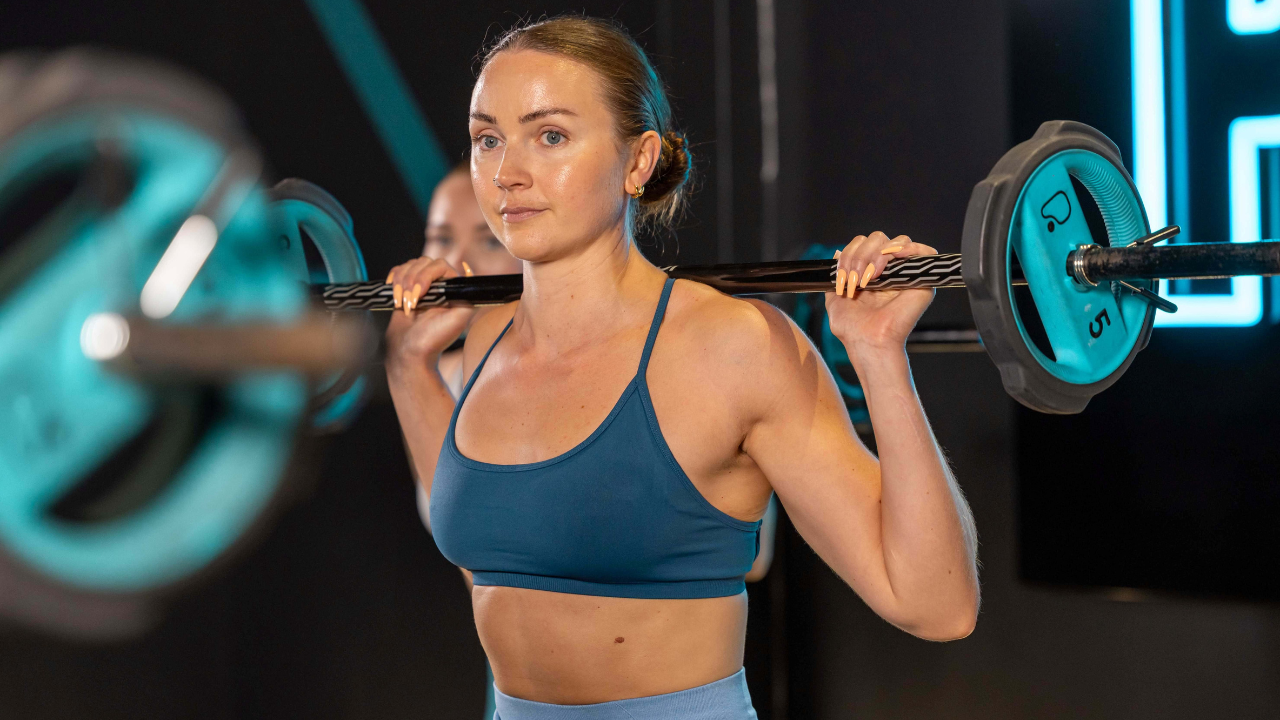
For lifting weights: A 130-pound dumbbell or barbell load is serious weight. If you are new to the gym, do not try to pick that up on day one. That is intermediate to advanced territory, depending on the exercise.
For luggage: 130 pounds of luggage is a disaster at the airport. You would be paying massive overweight fees. Most airlines want your checked bag under 50 pounds (23 kg), and your carry-on is usually limited to about 15 to 22 pounds (7 to 10 kg).
For a dog: A 130-pound dog is huge. Think Great Dane, Saint Bernard, or Mastiff territory.
For a baby: If a baby weighed 130 pounds, something has gone very wrong. Please consult a doctor immediately.
Final Word
So there you have it. 130 pounds equals 58.97 kilograms, or just 59 kilos if you are keeping things simple. You now know the exact formula, a mental shortcut for quick estimates, and a bunch of real-world situations where this conversion actually matters.
You do not need to be a math whiz. Just remember that a pound is a little less than half a kilogram, keep the reference table in mind, and use the “half minus 10 percent” trick when you need a fast answer.
The next time someone throws out “130 pounds” in a conversation, at the airport, or on a website, you will not have to pause and wonder. You will know instantly they are talking about roughly 59 kilos. And that small bit of knowledge makes navigating between the imperial and metric worlds just a little bit easier.
Read More: Best Hand Creams for Dry Skin: Reviews & Buying Tips
